



Inside France’s Ostrich Leather Supply Chain
Through Laplaine, her family farm and fully integrated ostrich leather supply chain, and Nilau, the brand that transforms this rare material into refined leather goods, Marie Veyron has built a unique model in contemporary luxury. From breeding to atelier, every step happens under one vision. A house where traceability, craftsmanship, and design are inseparable.
Luxury rarely begins in a field. It usually starts in a studio, a showroom, or a fashion capital. Marie Veyron’s story begins elsewhere, in open landscapes and on family land, shaped by the practical rhythm of rural life. Long before Laplaine or Nilau existed as names, there was a direct relationship to nature, to animals, and to materials. That proximity to origin still defines everything she creates today.
Veyron did not set out to build a conventional leather brand. Her approach to luxury grew from heritage rather than strategy. Laplaine, the family farm, is not simply a supplier behind the scenes. It is the foundation of the entire project. Generations of knowledge, care, and continuity converge there. From the beginning, her ambition was clear: reconnect luxury with its source and understand exactly where every material comes from and how it is transformed.
This is where ostrich leather enters the narrative. Long associated with discreet prestige, it remains one of the most distinctive and underused materials in high end leather goods. Recognizable by its natural quill pattern, ostrich leather combines softness with exceptional resistance. It is lighter than many traditional leathers, remarkably durable, and develops a beautiful patina over time. Yet few brands truly master it. Most rely on fragmented global sourcing, far removed from the final product.
Laplaine takes the opposite path.
Here, the process is integrated and local. The animals are raised on the farm, the skins are prepared and followed step by step, and every stage is fully traceable. Nothing is abstract or outsourced. Each hide has a known origin. Each transformation is controlled. This proximity changes the nature of the material itself. It is no longer a commodity purchased on a market. It becomes something living, with history and accountability.
For Veyron, this control is not about exclusivity alone. It is about responsibility and quality. Knowing the source allows higher standards, better practices, and a slower, more respectful rhythm of production. It also ensures a consistency that is rare when working with such a singular leather. The result is immediate to the touch. Supple, dense, almost silky, yet incredibly strong.
From this foundation, Nilau was born.
If Laplaine is the origin, Nilau is the expression. The brand translates raw material into form. Bags and leather pieces emerge from the atelier with a precise and understated aesthetic. The design never competes with the leather. Instead, it highlights its texture, depth, and character.
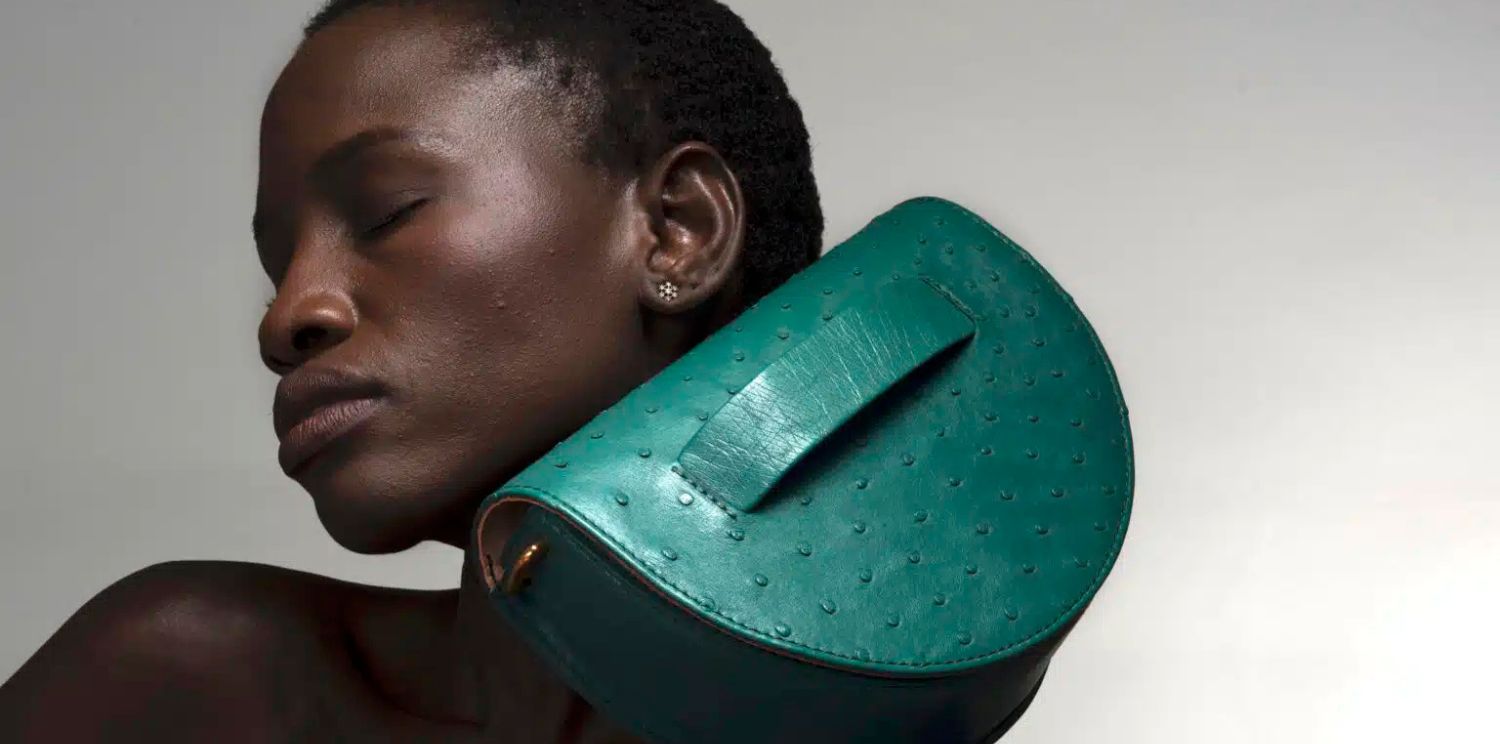
Nilau does not rely on logos or seasonal statements. Its language is quieter. Clean lines, balanced proportions, refined construction. Pieces that reveal their value gradually through touch and use rather than display. They feel timeless, designed to accompany a life rather than follow trends.
The atelier reflects this same philosophy. Production is deliberate and controlled. Each skin is examined individually, cut with intention, assembled by hand. Craftsmanship is visible in the stitching, the structure, the finishes. Nothing feels rushed or industrial. There is a sense that time has been allowed to do its work.
What makes the project particularly compelling is the coherence between the founder, the farm, and the brand. Many houses speak about authenticity or traceability. Few embody it so literally. At Laplaine and Nilau, the narrative is not constructed after the fact. It exists in the process itself. The same vision guides the land, the material, and the final object.
This creates a different definition of modern luxury. One that is closer to agriculture and craft than to spectacle. One where value comes from knowledge, proximity, and care. In an industry often built on opacity, this transparency feels almost radical.
Through Marie Veyron’s work, ostrich leather also gains a new cultural dimension. No longer perceived as exotic or niche, it becomes contemporary and architectural. Lighter, stronger, and uniquely textured, it offers an alternative language to traditional calfskin. Under her direction, it feels modern, elegant, and quietly distinctive.
Ultimately, Laplaine and Nilau function as one ecosystem. One grows and preserves the material. The other shapes it into objects of lasting value. Between them stands a founder who understands both worlds equally well, the rural and the refined, the raw and the finished.
In reconnecting luxury to the land, Marie Veyron proposes something rare. A house where nothing is disconnected, where every step is known, and where craftsmanship begins long before the atelier. From farm to finished piece, the journey is continuous. And in that continuity lies the true meaning of what she builds.


